Posted by PrichardDavid R L on Sun 13 Sep 2020 12:12:24 BST
The toppees worn in the photo were standard issue back in the day once a soldier arrived at a certain latitude where it was originally feared that the hot sun might scramble the brains of Britons exposed. The white Royal Marines Parade helmets (known as the Wolsey Helmet) is based on this headwear.
Posted by PrichardDavid R L on Sun 13 Sep 2020 12:10:57 BST
The ‘beds’ in this photo are made up of old-style petrol jerrycans balancing on planks. These thin tin cans were superseded by British copies of the German petrol cans, hence ‘Jerricans’! Simple when you know how.
Posted by PrichardDavid R L on Sun 13 Sep 2020 12:07:38 BST
Both the Brothers are Royal Navy Stokers, on the left is an Able Seaman on the right a Petty Officer (rank equivalent is Sergeant), both wear one Long Service stripe showing 4 years under the Colours. The Stokers arm Insignia is a Ships’ propeller and the term dates back to coal fired ships.
Posted by PrichardDavid R L on Sat 12 Sep 2020 20:38:25 BST
Sergeant Robinson is wearing the distinctive SAS Parachute Brevet (Winged Parachute) above his North Africa Star, later the badge would be worn on the right shoulder below any Regimental Title.
Posted by PrichardDavid R L on Sat 12 Sep 2020 20:32:13 BST
This is a vey early Parachute photograph as the Commando is wearing the protective helmet designed to prevent head injury when exiting a Whitley converted Bomber, the only spare aircraft available. A circular hole was cut in the floor, the parachutist sat on the side ready to jump going thru the Red light/a Green light procedure. Many hit their heads on the other side of the hole which was not a good way to start the descent. The padded helmet was intended to prevent that kind of injury. A steel helmet designed for Para Troops’ use was soon issued and the introduction of the US made Douglas DC-3 ‘Dakota’ with side exit ended that problem.
Posted by PrichardDavid R L on Sat 12 Sep 2020 20:28:10 BST
When 45 RM Commando went to Achnacary in 1943 for the final 10 days of their Green Beret Training they lived in Bell Tents in the grounds and slept on straw. It was basic but adequate. The period mentioned included the Acquaints and the Commando Tests. All preparatory training had been Prior to arrival. Source: Ply/X 105503 Marine Cliff Welsh RM. who was a Unit Founder Member, MMG Gunner and member of “F” Troop in pub conversations well after the War, he landed on Sword Beach D-Day and went on thru all their Battles into Germany.
Posted by PrichardDavid R L on Sat 12 Sep 2020 14:42:10 BST
They are ready to ump from a Dakota and it will be noted that no reserve Parachutes are being used, these were not introduced until late 1940s at earliest. They would jump using the static line which opening the ‘chute on exiting the aircraft if it did not work.............ROH!
Posted by PrichardDavid R L on Sat 12 Sep 2020 14:31:23 BST
He is armed with the 9mm Sterling Sun-Machine Gun a gas and blow-back operated weapon.
Posted by PrichardDavid R L on Fri 11 Sep 2020 22:38:18 BST
The second man from left is carrying the very heavy MMG Tripod like it Has no weight! The Commando in front of him has a Bren slung over his right shoulder.
Posted by PrichardDavid R L on Fri 11 Sep 2020 22:34:50 BST
The right hand man is holding a captured German rifle.
Posted by PrichardDavid R L on Fri 11 Sep 2020 21:27:35 BST
This photo shows an injured WO2 being carried to a Field Dressing Station on a litter made using rifles
Posted by PrichardDavid R L on Fri 11 Sep 2020 21:26:16 BST
I believe the badge on the chest of the Commando in the centre of this photo are Polish Parachute “Wings”
Posted by PrichardDavid R L on Fri 11 Sep 2020 21:13:35 BST
This photo shows the small (back) pack of the ‘37 Pattern Webbing with Gas Cape neatly folded, below that is the ‘new’ style Respirator pack and below that the handle of the entrenching tool. All these Polish Commandos are also carrying the famous Toggle Ropes .
Posted by PrichardDavid R L on Fri 11 Sep 2020 21:10:51 BST
His Cap Badge is the Mailed Fist of the Royal Armoured Corps in silver or nickel metal.
Posted by PrichardDavid R L on Fri 11 Sep 2020 19:32:17 BST
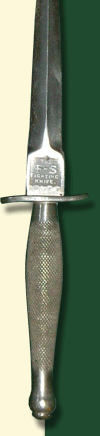
The kneeling Commando has his F & S Commando Knife gripped in his teeth!
Posted by PrichardDavid R L on Fri 11 Sep 2020 19:19:04 BST
Notice the cowling over front headlight to prevent unnecessary lights showing.
Posted by PrichardDavid R L on Fri 11 Sep 2020 19:05:59 BST
The central man is a Despatch Rider (motor cycle rider) judging by his Helmet, breeches and high boots. Known as DonR they would wear a badge with the letters DR centred on wings and were used extensively to carry any urgent messages when radio communications were either not secure or not working properly.
Posted by PrichardDavid R L on Fri 11 Sep 2020 19:04:29 BST
As the front number plate is white this is probably a captured a German Military Motor Cycle.
Posted by PrichardDavid R L on Fri 11 Sep 2020 18:53:29 BST
This mix includes one matelot and some Yanks apparently relaxing!
Posted by PrichardDavid R L on Fri 11 Sep 2020 18:51:48 BST
I stand corrected, he was actually a Member of a Naval Police a Unit which had a Royal Marine included. The armband reads NP those letters being separated by a a Crown. He would have had limited powers to take action against a Service Personnel found mis-behaving or Off-Limits.
Posted by PrichardDavid R L on Fri 11 Sep 2020 18:49:27 BST
Judging by his uniform etc., he is a Member of Regimental Police Unit. He is wearing an arm band which would carry the letter RP as opposed to MP as the a Royal Marines did not have Military Police trained as such until the 1960s.
Posted by PrichardDavid R L on Fri 11 Sep 2020 18:43:24 BST
This Commando is meeting a Yank judging by the Rifle he is carrying which is a M1 Garand.
Posted by PrichardDavid R L on Thu 10 Sep 2020 23:08:25 BST
He is wearing the distinctive Parachutist Brevet of the SAS. Now worn on the top right sleeve.
Posted by PrichardDavid R L on Thu 10 Sep 2020 14:32:35 BST
In the preparation for D-Day Commandos used Bombed and wrecked British Cities to acquire skills for Fighting in Built-Up Areas which was to stand them in good stead once across the Channel. This known by the Acronym FIBUA.
Posted by PrichardDavid R L on Thu 10 Sep 2020 14:26:06 BST