76 - D F Carpenter (Chips) - Trevissa, Smallfield, Horley, Surrey
Date: 22/11/2016
Views: 8231
Owner: Nick Collins
Latest Comments
Photo update
Details added.
Posted by Pete Rogers (Admin) on Mon 28 Feb 2022 16:09:04 GMT
This is one of a series of photos showing a variety of Commando Shoulder ‘flashes’ and it is apparent these were hand stitched, or locally made, to ensure the the Commando Identity of Troopers was evident marking them out as Special Men.
Posted by PrichardDavid R L on Sun 27 Sep 2020 11:34:45 BST
This is a cracking example of the Beret BAdge of 5 (Army) Commando who also adopted a Gold or yellow coloured Hackle traditionally worn by Fusilier Regiments.
Posted by PrichardDavid R L on Sun 27 Sep 2020 11:30:20 BST
If this photo has you scratching your head it shows how the first Beret Badges for 2 (Army) Commando were fashioned using a nickel fork and a file. As Units were being formed there was no central kit issue until the introduction of the universal Commando Green Beret, even then most Troopers wore the Cap Badge of their ‘home’ Regiment, Corps or Service. Even the Achnacary Assault Courses were made by hand, using local material such as trees.
Posted by PrichardDavid R L on Sun 27 Sep 2020 11:25:33 BST
The Cap Badge of The Royal Welch Fusiliers, could be worn with a white feather Hackle.
Posted by PrichardDavid R L on Thu 24 Sep 2020 15:15:38 BST
I had a pal who was a Royal Marines Sergeant Weapons Instructor. He was on secondment to the French Marines and on the anniversary of Trafalgar was surprised to be invited to a Celebration of Trafalgar. He told them that they lost there and was told, “ We shot Nelson!”
Posted by PrichardDavid R L on Tue 22 Sep 2020 23:00:54 BST
The Cap Badge is that of the Kings’ Shropshire Light Infantry carrying the traditional Hunting Horn worn by all LI Regiments. These were originally raised to fight in American were the red tunics of the Infantry proved ideal targets for the Colonial Riflemen who were all excellent marksmen and hunted wild -life as food. The LI came with new’ dark green uniforms, trained as marksmen and to move at high speed.
Posted by PrichardDavid R L on Sat 12 Sep 2020 15:07:50 BST
In ancient mythology it was said the a Salamander could survive Fire so was possibly the reason this symbol was chosen.
Posted by PrichardDavid R L on Sat 12 Sep 2020 15:02:29 BST
This is the famous and feared Gurkha fighting knife.
Posted by PrichardDavid R L on Thu 03 Sep 2020 21:07:15 BST
The handle, an extension of the blade and hidden by the grip would show the name of the man who forged the blade by hand, all their names are known.
Posted by David Prichard on Fri 28 Aug 2020 23:39:46 BST
The a Japanese name for this type of sword was a Katana. They were handed down from Father to Son, could be both very old and equally valuable.
Posted by David Prichard on Fri 28 Aug 2020 23:37:40 BST
The three medals shown are those issued to those who served in the First World War (WW1) and we’re commonly referred to as, ‘ Pip, Squeak and Wilfred’ characters in a popular Comic of that time.
Posted by David Prichard on Fri 28 Aug 2020 23:34:54 BST
1st Pattern F & S Commando Fighting Knife which had a narrower blade than the later version.
Posted by David Prichard on Fri 28 Aug 2020 23:29:43 BST
A Royal Marines Commando Beret, every man was issued with a Name Stamp,to mark every item of his kit.
Posted by David Prichard on Fri 28 Aug 2020 23:13:02 BST
The Cap Badge is from a Staffordshire Regiment and has a Kings’ Crown. The origin of that knot is derived from one designed to hang three men together!
Posted by David Prichard on Fri 28 Aug 2020 23:09:56 BST
This is a small map case with fitment for pens, pencils etc.
Posted by David Prichard on Wed 26 Aug 2020 17:42:32 BST
’38 Pattern holster for .45 Webley Service Revolve small pouch above was for spare rounds (bullets for the uninitiated).
Posted by David Prichard on Wed 26 Aug 2020 17:40:43 BST
This waistcoat was designed to carry loaded curved magazines for the .303” Bren, there were a few at CTCRM used by Camp Staff who laid on flash demos or acted as “Enemy” in the early 1960s, there were also some WW2 German helmets. At CTCRM there was a group of Trained Marines who formed the Field Training Staff (FTS) who would lay on ‘flash’ demos as part of Recruit Training and would show the right and wrong methods to be used so it formed part of the harsh learning curve.
Posted by David Prichard on Wed 26 Aug 2020 17:34:54 BST




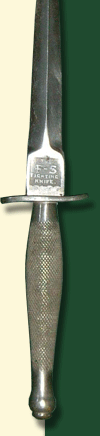



Photo update
Details added.
Posted by Pete Rogers (Admin) on Mon 28 Feb 2022 16:09:04 GMT